Media: planet trivia
By Richard North - October 21, 2024

In a somewhat trivial article in the Sunday Times, one of the original Blairite spin doctors, Peter Mandelson, is interviewed on Starmer’s “bumpy” early months in power, under the heading: “Keir finds media noise trivial. I could’ve warned him”.
Author of the piece, Josh Glancy, notes that the prime minister doesn’t seem to be exhibiting Mandelsonian levels of political shrewdness and media guile, having allowed stories such as the freebies scandal to dominate the headlines, and asks Mandelson whether he is a little disappointed.
This is the man who was one of the first to whom the term “spin doctor” was applied, the man who gained the soubriquet “Prince of Darkness” in recognition of his ruthless treatment of the media – a style which was mimicked in the BBC political series The Thick of it.
True to form, in response Glancy, Mandelson “pivots quickly to blaming the media”, which he says is now fiercer and less patient than in the New Labour era. Analysing their modus operandi, he talks of a media “that is chasing algorithms rather than news”.
With most of the media relying increasingly on their websites for advertising income, he accuses them of only wanting “clickbait”. Perhaps, he says, “the media needs to adjust to quieter, calmer, more stable times and allow the government to pursue policies for the long term. Nothing can be turned around overnight”.
Glancy agrees that there is some truth in this, but he also feels that this is a little too easy and excuse – which is exactly what might be expected of a print journalist. He argues that the prime minister’s team has not been adept at puncturing bad-news stories, possibly because Starmer sees a lot of political coverage as frivolous ephemera and seeks to bludgeon his way through it.
Mandelson effectively endorses this view, saying that “He (Starmer) will have been amazed at how much time and energy is consumed by dealing with the media”.
This relates particularly to the business over Taylor Swift or suits or specs, all of which will seem to him incredibly trivial when he wants to focus on the big picture. “I could have warned him, what it would be like”, says Mandelson.
In that sense, nothing very much has changed although it is probably reasonable to assert that the trivialisation of the media is a progression, which has the deterioration increasing over time, with the web speeding up the process as news rooms chase after hits.
One only has to recall the superficial level of reporting over Ukraine, the almost complete absence of coverage on other conflicts, such as those in Sudan and Burma (Myanmar), to accept that Mandelson has a point, even if he is seeking to deflect attention from some of Starmer’s evident failings as a politician and prime minister.
That said, there are days when it would be hard to criticise the print media collective for its choice of front-page headlines on one of those days when there is no common theme and virtually every lead story is different.
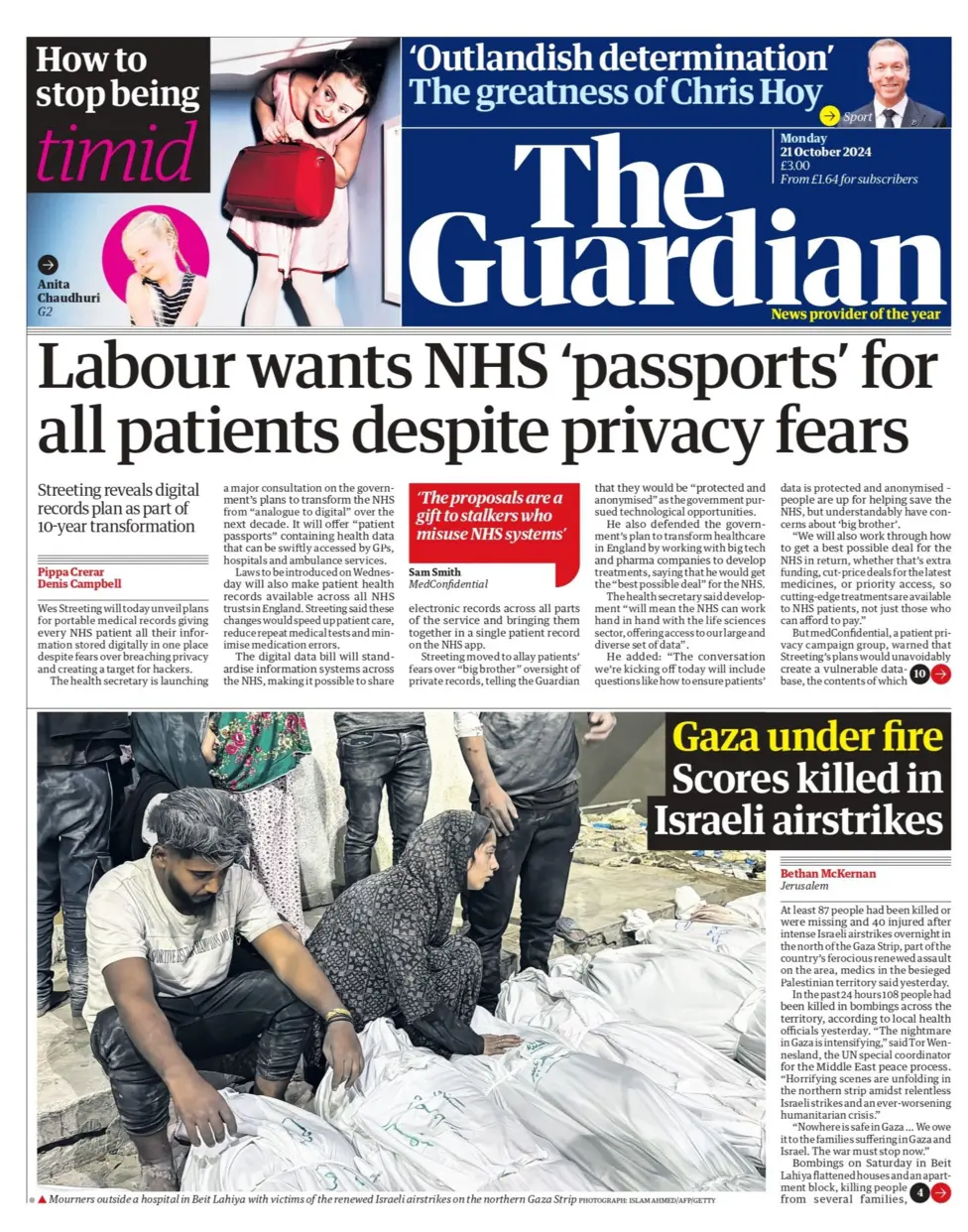
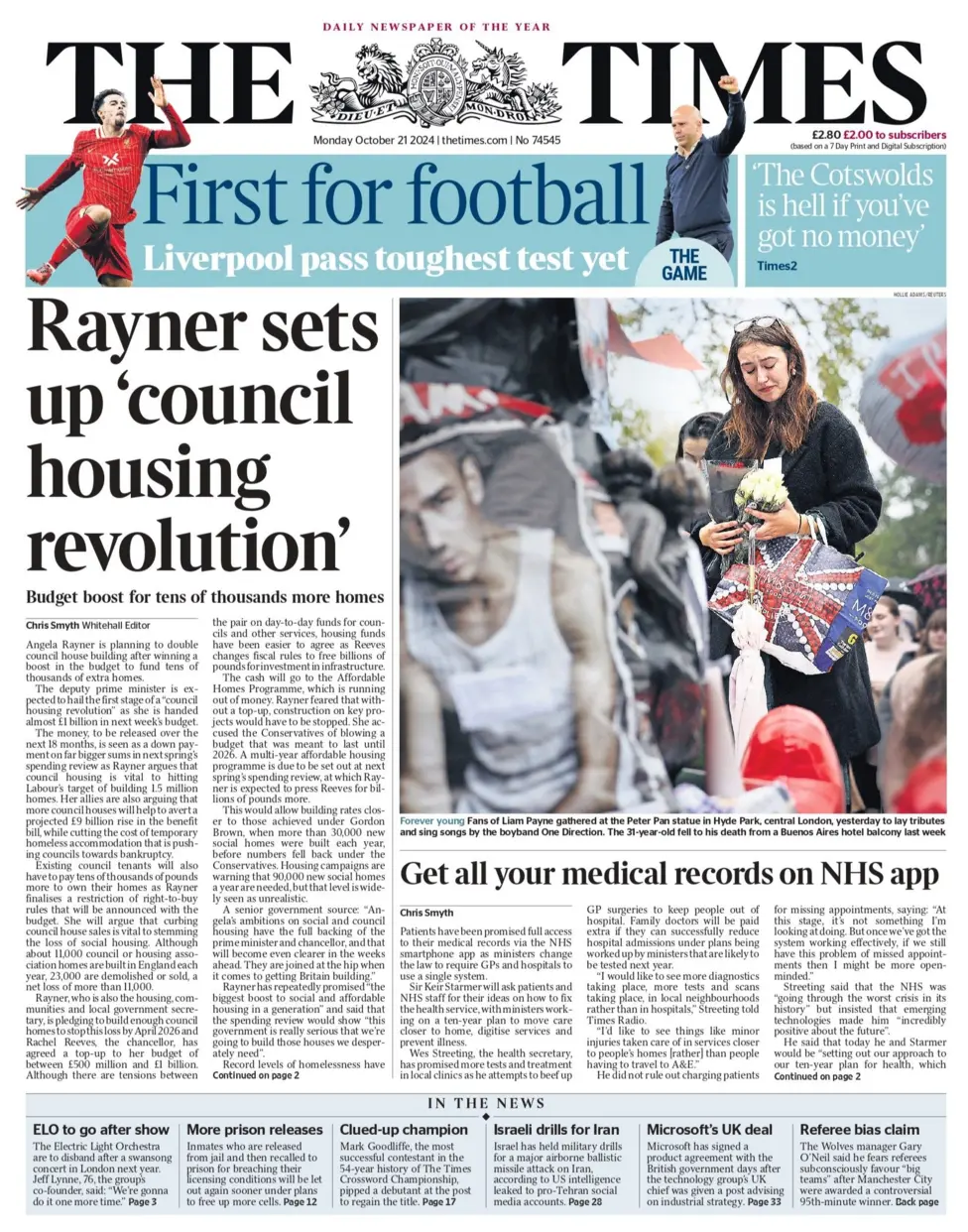
The print edition of the Guardian thus leads with the headline “Labour wants NHS ‘passports’ for all patients despite privacy fears”, while The Times could not be more different with “Rayner sets up ‘council housing revolution”.
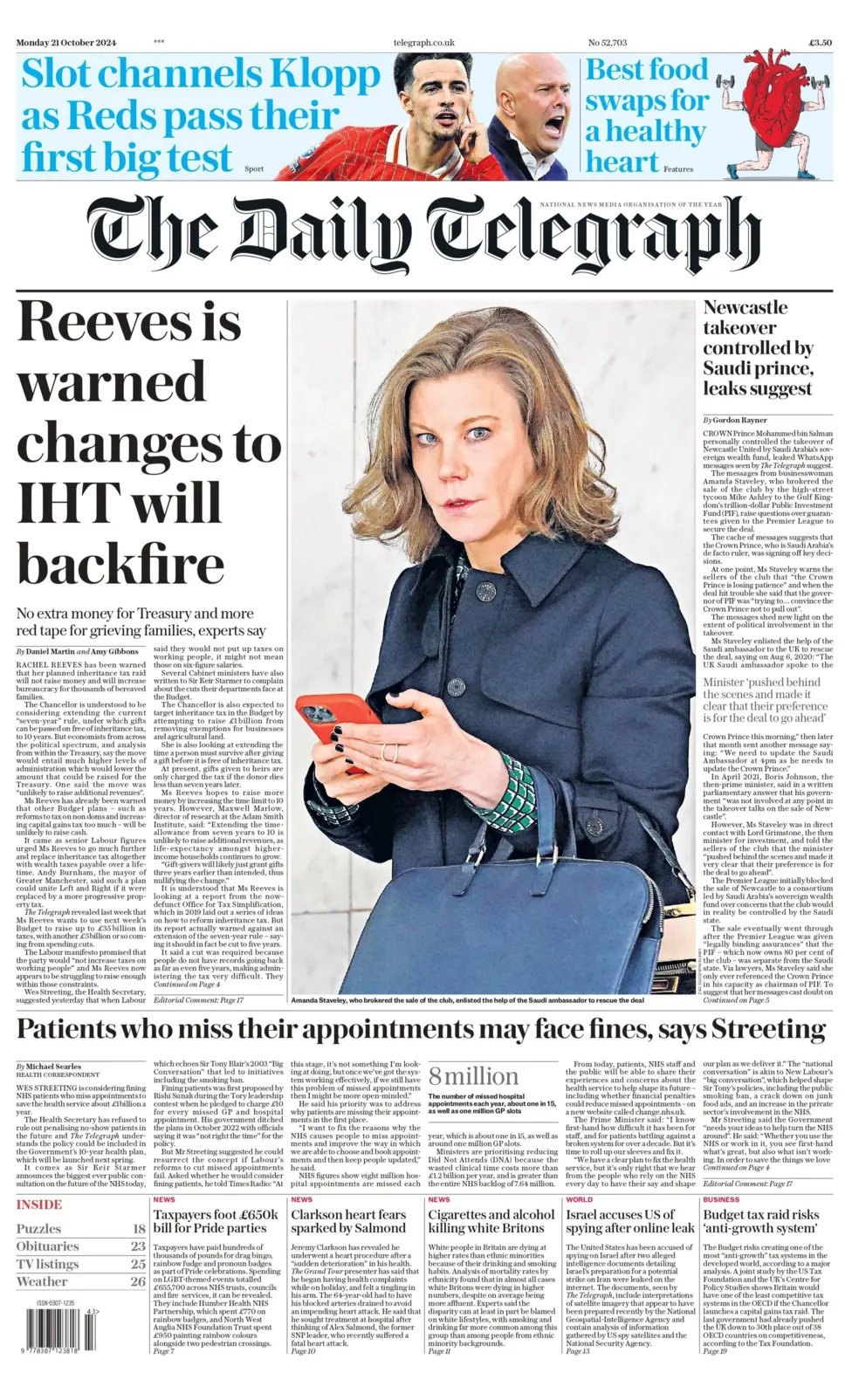
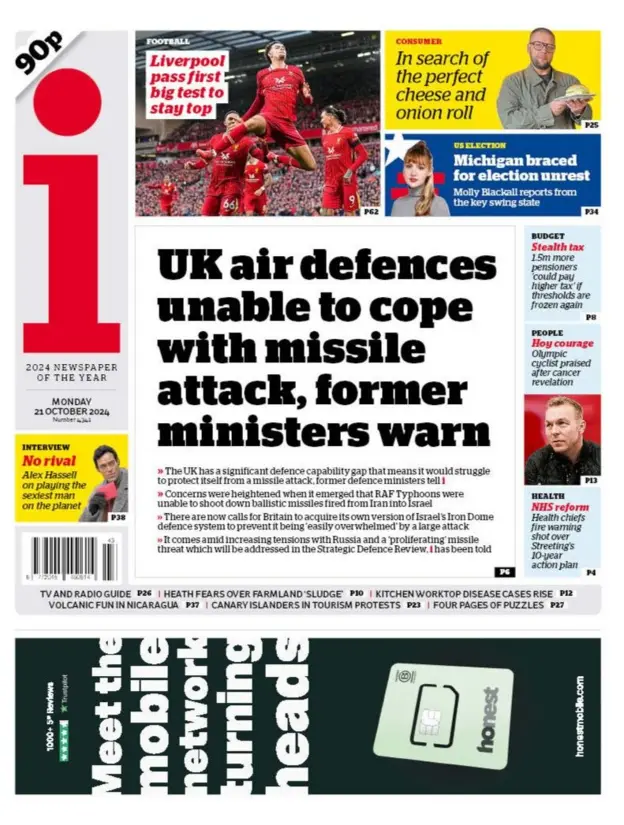
The Telegraph, on the other hand, runs with a story headed: “Reeves is warned changes to IHT will backfire”, again out on its own amongst the three “quality” newspapers, although one might grudgingly add iNews, which offers; “UK air defences unable to cope with missile attack, former ministers warn” – something which is not entirely news to many of us.
Given that variety, with the tabloids each running their own different stories, the immediate problem is not so much the surfeit of trivia (although there is plenty of that on the inner pages) as the sheer number of heavyweight stories which demand attention.
For the ordinary mortal, there is perhaps too much to deal with – which might explain why so many people retreat into the trivia as a relief from the toil of addressing and trying to understand issues of substance.
Certainly, it provides a plausible explanation for Elon Musk’s proud boast that his “X” (aka Twitter) is now the number one source for news on the planet Earth.
One can take that claim under advisement but there it is an indisputable fact that the majority of people do not make the traditional (or legacy) media their first port of call when seeking to update themselves on current events.
For many it may be Twitter, or for the younger generations TikTok or its derivatives, and for some it is news forums on gaming website – a source that is almost completely under the radar.
What makes the difference in the “social media” sphere is the degree of selectivity. Mandelson talks of “chasing algorithms”, but in the likes of Twitter, the algorithms will present material to individuals based on their preferences, as identified by their engagements and their followers.
Thus, where users may for instance be especially interested in migration as a subject, the algorithms will ensure that they will be fed a constant diet of posts about migrants and immigration.
In a very real sense, this is a useful function. There was, for instance, a story in the Mail very recently, headed: “A city at migration breaking point: An unvarnished dispatch from Coventry – which saw over 22,000 arrivals from overseas in a single year – exposes how housing, schools and GPs are being placed under unbearable strain”.
As is so often the case with the Mail, this headline tells much of the story, and one can guess from it that the city of Coventry has become a third world melting pot that has long ceased to be an English city.
When it comes to integration, this is a significant issue for, with foreign nationals or their offspring forming the substantial part of the city’s population, there is no longer any significant English community with which the incomers could integrate, even if they wanted to – which many don’t.
The point about this piece, though, is that without Twitter, I would probably never have picked up this story. I rarely visit the Mail website and have neither the time nor the inclination to trawl through the daily mountain of trivia in order to happen upon the occasional nugget.
What Twitter does for me, therefore, is provide a screening service, giving me the stuff that is of most interest to me. But that, unfortunately, as its own downside. It tends to generate a powerful confirmation bias, shaping the news I am given to match my perception of the world.
There are, however, ways of cheating the algorithm to give a more catholic fare, but it takes time and dedication to produce a timeline which serves up material that I should see, rather than just the stuff I want to see – and even then, this is a process which is far from perfection.
The net effect of unmodified preferences though – which must account for the majority of users – is that most people are getting only a limited and partial account of the news agenda, largely that part which they themselves have had chosen for them by the ever-active algorithms.
Long gone are the days when people would turn up to work in the morning, all ready to discuss what they’d read in the newspapers or seen on the television the previous evening. Where people now physically gather, they all have different agendas and, in the main, tend to engage more with their mobile phones than they do the human beings in front of them.
And yet, few of us would have it any other way. Where else would Pete get such a large audience for his work, when the legacy media is a closed shop, reserved for the chosen few.
Then, there are few places in the legacy media where one would get writing like this, and long before the media had stirred itself to deliver, this information was already on the web, recording the result of the Moldavian EU referendum, 54-46 percent against, as opposed to the pre-referendum poll which had 67.6 percent in favour, with 32.4 percent against.
Thus, the thing to bear in mind of contemporary politics is that we all come to the table with different datasets. Probably the only group consistently reading the legacy media – and believing what is written – are the political classes.
What Starmer needs to know, therefore, is that while he and his colleagues are beset with trivia, much of the nation has screened it out and is looking at the hard stuff – like immigration. We might as well be on different planets, which makes his a dangerous place to be.