
Politics: gestures
By Richard North - July 22, 2026
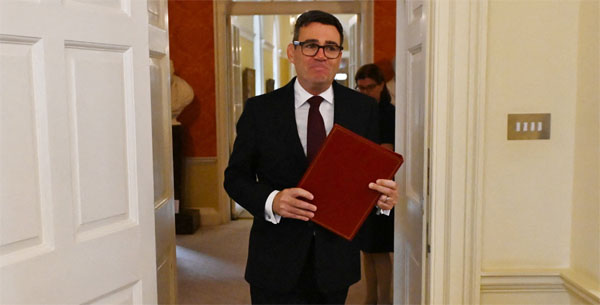
We’re actually being taken for fools (or some of us are) with the claim that Mr Burn’em’s VAT cut on electricity, which takes effect from 1 October, is estimated to save the average household about £42 per year.
The thing is, the Ofgem energy price cap is predicted to rise this autumn on 1 October 2026, with average family bills expected to increase by around £50 to £100 a year.
Thus, while the new prime minister might be claiming to help with the cost of living, and the new business secretary Jonathan Reynolds says the cut would give people some “breathing space”, the best the average household can hope for is a marginal rise.
Very few will see an overall cut, which means that the help offered by the government is illusory. Prices will go up, but not quite as fast. The only “breathing space” comes with the delay in the announcement of how much more we will have to pay as Ofgem doesn’t publish the official figures until 26 August.
Allison Pearson in the Telegraph sort of gets it, with her column headed: “Struggling voters deserve better than Burnham’s con tricks”.
Rightly, she observes that if Burn’em really wanted to put more cash in our pockets, he’d cut the green levy on energy bills, not the VAT that saves just 86p a week.
She doesn’t seem to have twigged that there are no savings at all, although she does note that the energy price cap went up £3.58 a week on 1 July. The government is not offering us relief on the previous, appallingly-high energy bills, she says: “It’s shaving a pitiful sliver off even more eye-watering bills to come and pocketing the credit”.
The one irony is that, for what little relief we get, we have Brexit to thank. Under the EU’s original Sixth VAT Directive (now recast) a member state could not legally reduce the VAT on electricity to zero as this does not qualify for a zero or super-reduced rate. The minimum allowable is 5 percent.
Only because we have left the EU is Burn’em able to take this measure. It is interesting to note, though, that in Northern Ireland, VAT on electricity will remain at 5 percent.
Electricity supply in the province is caught by the NI Protocol as modified by the Windsor Framework, which means that the EU’s single electricity market rules apply. This includes the harmonisation of VAT with the rest of the EU.
Thus, the Stormont government will be given money to fund equivalent cost of living reductions for citizens of Northern Ireland. How much money is involved and how it will be spent hasn’t been specified, but the UK government will have to be careful not to breach state aid rules. Even then, some businesses in the province will be disadvantaged.
In mainland Britain, however, there is another irony. The VAT cut only applies to electricity and not gas, yet for the lower income households in winter, the cost of gas for heating is a far greater proportion of their energy expenditure, and the area where they get least help.
Perversely, the greatest beneficiaries in cash terms will be the higher-income households, who use more electricity overall despite it making up a smaller share of their spending.
In all respects, therefore, this precisely conforms with Pearson’s characterisation of this measure as a “con trick” – a showy, off-the-cuff headline grabber which has no real impact.
Even the Guardian is unimpressed, citing charities which say that to really make an impact, the government should be looking at the problems faced by people who are already behind with their bills. Energy debt, we are reminded, is at a record high. The industry trade association Energy UK puts it currently at £5.5 billion.
The shape of this debt is remarkable. National Debtline says energy is the second most common debt its advisers hear about, and that on average people contacting it owe £2,575 to their providers. It speaks of a debt relief scheme that would allow suppliers to write off some outstanding bills. This has been proposed and consulted on by Ofgem, but is not in place.
We then get to hear from Steve Vaid, the chief executive of the Money Advice Trust, the charity that runs National Debtline. He says: “Ministers should move ahead with the scheme now to provide urgent respite for people who’ve built up energy debts through no fault of their own”.
He points to nearly half (46 percent) of the people supported at National Debtline who do not have enough money to even cover their essential bills. From this, he says, “it is clear households desperately need support with the cost of living, support to build financial resilience, and increased access to advice to help them find a way forward”.
But even the bigger picture doesn’t escape the Guardian. It also quotes Andrew Sissons, a director at the thinktank Nesta, which has advised the new government on energy policy.
He says that, while the VAT relief would help during the colder months, November’s budget “would be the right opportunity for the new chancellor to set out a wider and more long-term set of reforms to reduce electricity costs”.
Nesta, we are told, has put forward a more detailed plan, which would change the way household gas is charged and remove some policy levies from bills – at dumping £3.2 billion a year on the taxpayer (a highly dubious proposition) – in order to shave £130 off average bills.
Unsurprisingly, industry is also warned that businesses will need help. The VAT relief will not apply to most businesses, aside from micro-companies and charities, so will do little to stem the economic contagion of higher energy costs, which has inflated the price of everyday goods.
And that’s the real point. If Burn’em really wants to tackle the cost-of-living crisis, he needs to slash energy costs, which impact on a wide range of other prices. But, with Burn’em, that’s not on the agenda. Gestures-R-Us.
With this one under his belt, it now seems that Burn’em is on the hunt for some more. He has instructed his cabinet to examine “all possible ways” to tackle the cost-of-living crisis, in a bid to become seen as a “cost of living government”.
Next in line, it seems, is reducing the national cap on bus fares by a third, from £3 to £2, a move which he is expected to announce today, even though the impact is likely to be of limited effect.
Burn’em’s problem is that only about 23 percent of the population in Britain regularly uses local buses (defined as travelling by bus at least once a week).
Occasional users amount to 27- 28 percent, those who use a bus less than once a week, but at least once a year. Crucially, around 50 percent of the population rarely or never use a local bus (less than once a year) and would be completely untouched by Andy’s largess.
More troubling for the self-styled “King of the North”, the main beneficiaries would be Londoners. In the capital, bus networks are heavily integrated, and the average London resident takes the bus 135–142 times per year. Thus London alone accounts for roughly 45 percent of all bus journeys in Great Britain.
Outside London, and especially in the domain of the North, regular usage drops off sharply. In England outside London, residents average just 37 bus trips per year. In Scotland, the average is roughly 86 times a year, while Wales sees the lowest average usage.
Furthermore, there is a huge disparity between urban and rural dwellers. In urban areas, about 19 percent of people use the bus several times a week, compared to just 5 percent in rural communities where service frequencies are often low.
If Burn’em wants to be the man of the people, touching the lives of the wider population, in order to build his fabled “new national sense of unity, of common purpose and positivity”, bus riders are by no means the best target. With 83 percent of people driving or riding in a car at least once a week, assisting hard-pressed motorists would be far more effective.
Of course, Burn’em isn’t going to do that. He declares that his priority is to make life cheaper for voters, asking his cabinet colleagues: “What can we do just to take that little bit of pressure off people’s shoulders, just to give them that little extra sense that help is coming so that they can have that bit of hope that things are getting better?”.
But it’s not hope he’s selling. That was destroyed on the ground. This, from current form, is a man in the market for gestures. It is unlikely that anything else will be forthcoming.
