
Brexit: ten years on
By Richard North - June 23, 2026
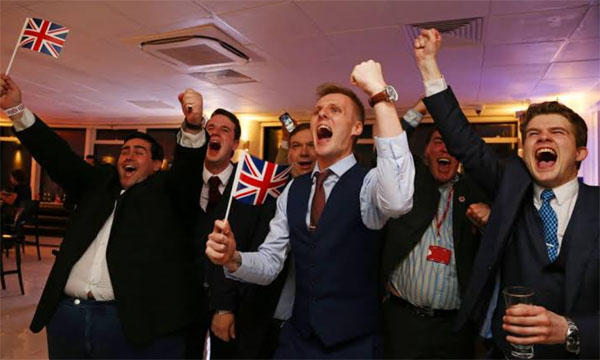
My first thought of Starmer’s promised resignation as Labour leader (he hasn’t actually resigned as prime minister yet) was his lack of consideration in arranging this event on the eve of the tenth anniversary of the Brexit referendum.
On second thoughts, though, he’s probably done us a favour in driving out from today’s media endless, turgid retrospectives from clueless hacks and pundits, most of whom know little more about the EU than they did in the run-up to the referendum – which, generally, is very little.
That much is evident from the “great debate” hosted by the Telegraph set for 29 June which calls up a motley collection of talking heads to instruct us on “How to make Brexit a success”.
The very title screams of the woolly thinking that attends this issue. Inasmuch as the objective of Brexit was leaving the EU, Brexit has been a success: we have left the EU – which is what the referendum was all about.
What these talking heads are confronting is not Brexit – nor even the Brexit settlement which successive governments negotiated with the EU. That latter process is done and dusted – it’s over and cannot be rehashed.
For sure, we can negotiate any number of deals and relationships with the EU – as have hundreds of other states – and although some may have the effect of modifying the settlement, that isn’t Brexit. It’s actually post-Brexit governance or, in simple terms, just plain governance. That’s what independent states do,
The lingering question, though, is the state of the Brexit settlement – the process of negotiating our departure from the EU and the related issue. And, in the annals of British history, it is probably fair to say that there are few occasions where such an important process has been so badly handled.
Not least were the so-called “indicative votes” which took place in the Commons on 27 March and 1 April 2019, when MPs voted on 12 distinct propositions across the two sessions, but every single motion was rejected, leaving parliament unable to find a majority for any Brexit plan, resulting on total deadlock.
This, as I wrote in The Great Deception (Fourth Edition), was parliament at its worst. Unable or unwilling to give leadership to the country, the only time it could unite was to express what I didn’t want.
But, if this was the pinnacle of ineptitude, the rot had started much, much earlier and, if any one person (apart from Nigel Farage) to whom the failure to plan for Brexit can be attributed, it is that great genius in his own lunchtime, Dominic Cummings.
Cummings actually wrote to me, out of the blue on 17 May 2015, telling me that, because of his old job as campaign director for Business for Sterling, “the No campaign, all sorts of people” were getting in touch with him regarding the referendum.
He “obviously thought the first step should be to speak to the No1 expert in the country on EU policy”. He wrote that he didn’t always agree with me on politics and communications but added, “your knowledge of the issues is obviously incomparable, on our side anyway!”.
At that time, he had acquired a copy of my exit plan, which I had called Flexcit, and he promised to study it.
We met a few days later at the King Charles pub, behind Kings Cross station, when he had a heavily annotated copy, which we discussed at length. It was to be the first of many cordial meetings, many of them under the aegis of an informal Referendum Planning Group hosted by Owen Paterson in his capacious office on the corner of Parliament Street.
Despite the central part of the exit plan in my thinking, though, on 25 June, without having talked to me, Cummings published a blogpost headed: “On the Referendum #6: Exit plans and a second referendum”.
Addressing the issue of the exit plan, he wrote something which set off my alarm bells: “There is much to be gained by swerving the whole issue”, he said, “No10 is dusting off its lines from the Scottish referendum. Perhaps they can be neutralised”.
In a longer passage (Cummings doesn’t do short), he wrote that “Different people have different ideas about the best way to leave” but then went on to say that none of the options were “the real point”.
His view was: “We are not a government. We can’t negotiate anything. A NO vote as a simple matter of law does not mean that we leave the EU tomorrow”. A new government team would have to negotiate a new deal with the EU and then, in a mistaken assumption, be believed that we would then get a second referendum on the deal negotiated. “If the country votes NO”, he averred, “we can force politicians to get us a better deal”.
That was his premise, an argument I tackled head-on in my own blog,
I referred to a piece I’d written earlier about what I called the Stokes precept, named after the Conservative MP Richard Stokes, who contributed to a debate in the Commons on 15 October 1940 (at the height of the London Blitz) on war aims.
These at the time (and were to continue to be) an extremely contentious issue, whence Mr Stokes had argued that that you cannot campaign solely on a negative. You have to give people something positive to aim for.
Arguably, I wrote, it was the failure of Churchill to offer a positive vision for his war aims (resolutely refusing to discuss them or permit a formal statement) that lost him the 1945 general election. And here, I said, “you are suggesting that we fight on a negative basis, a strategy that, in my view, will ensure we lose”.
I was wrong about this being a losing strategy – I had underestimated the impact of the media trivialising the campaign and turning it into a personality contest, based in the Oaf Johnson. However, where I was right – and Cummings wholly wrong – was that we’d only get one bite at the cherry and we need a “positive vision” of what a post-exit Britain might look like.
Contact with Cummings continued and there were close discussions on my joining the emerging Leave Campaign, culminating in a meeting at the famous 2 Amici Italian restaurant in Westminster on 15 September, hosted by Owen. We had a long, frank discussion and ended up on cordial terms, pledging on a handshake the closest cooperation.
I never heard from Cummings again. My phone calls and e-mails went unanswered: I was totally ghosted by the campaign. The moral and intellectual pygmy didn’t have the decency (or courage) to talk to me about why I had been excluded.
With that, any chance of getting Flexcit adopted by the Leave Campaign evaporated and, although I and others set up our own campaign, the Leave Alliance, the media and the Tory European Research Group (ERG) completely ignored our
plan.
With his faulty assumption that there would be a second referendum – covering the exit deal – Cummings came out of the referendum with, to borrow from the Godfather, just his dick in his hands. The campaign – which could and should have given the lead – was completely unprepared for what came next.
Had my favoured “Norway option” come about, with the UK staying in the EEA (with or without Efta), then many of the problems we encountered (especially with Northern Ireland) would not have occurred.
Those who objected to the EEA on the grounds that we would be forced to concede freedom of movement, clearly did not understand the Liechtenstein option, with both sides displaying lamentable flaws in their logic and comprehension abilities.
As regards continued EEA membership, what was not understood either was that I intended it as an interim measure with the intention of renegotiating the agreement to restore the original format of the European Economic Space, where all parties shared common decision-making – thus removing the spectre of the UK as a rule-taker.
Sadly, the ERG was in the grip of a “fwee twade” obsession, showing little grasp of the technicalities of trade relationships with the EU, producing nonsense plans which so lacked plausibility as to be absurd.
But that became the story of the Brexit agreement. Totally unprepared, and lacking in technical knowledge and understanding, we were led by the nose by the Commission which crafted an agreement which we had no choice but to adopt, having failed to come up with any realistic ideas of our own.
Looking back at the period, for me it has been a time of intense frustration and disappointment, watching the opportunity of a lifetime dribble away through the formidable combination of ignorance, arrogance, stupidity and bad faith.
