
Defence: deep find futility
By Richard North - July 27, 2026
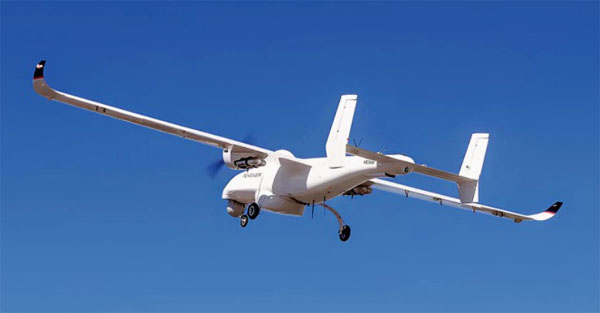
One of the less publicised procurement disasters perpetrated by the MoD is its long-standing failure to deliver to the Army a working fleet of what are known as Medium-Altitude Long-Endurance (MALE) drones, tasked with the so-called “deep find” role, finding targets in the 50-150Km zone behind enemy lines.
Having already failed twice, in two separate projects, to provide working equipment, it seems that the MoD is ready to try again with a brand new £400 million venture.
The best that can be said of the current plans, however, is that the Ministry has learnt from past mistakes and is taking pains not to repeat them. Instead, it is embarking on a whole new raft of mistakes which will leave the Army no better-equipped and the taxpayer hundreds of millions out of pocket.
The saga started in the early 1980s with the Pheonix programme for which a development contract was formally awarded in 1985. It proved a dismal failure from the very start.
After a delayed introduction in 1999 – ten years later than planned – it was not fully abandoned until March 2008, having proved its total inadequacy in Iraq in 2006, the initial contract price having soared from £80 million to £345 million.
In 2006, the Pheonix was briefly replaced in the Iraq theatre to fill a dangerous gap in our counterinsurgency capabilities. The drone chosen was the Israeli-built Hermes 450, but this was only a temporary fix. The longer-term aim was to use the Hermes 450 as a base for a new British-built drone which was to be called the watchkeeper.
To build it, Thales UK paired up with Israel’s Elbit Systems, which manufactured the Hermes, to create a joint-venture company called UAV Tactical Systems (U-TacS) based in Leicester. Elbit held a controlling 51 percent stake in the entity.
However, while the Hermes 450 had worked very successfully for the Israeli military, the Watchkeeper version was a disaster. The MoD had insisted on heavily modifying the original platform, adding a massive, heavy dual-sensor payload, an ice-protection system, and a complicated automated landing system called Magic-ATOLS.
These additions made the drone far heavier and altered its aerodynamics, fundamentally altering the original, reliable Israeli flight characteristics. Furthermore, because of the sweeping design changes, the drone had to go through rigorous, years-long safety certifications with the UK’s Civil Aviation and Military Aviation Authorities.
It became too heavy and complex to meet standard regulations smoothly, leading to years of grounding, countless software glitches, and numerous high-profile crashes during test flights. By trying to turn a sleek Israeli desert scout into a heavy, all-weather European platform, the MoD essentially broke a working design.
When issued in 2005, the original contract for 54 platforms was budgeted at £800 million, with an in-service date of 2010. Yet, mirroring the Pheonix experience, the system did not reach full operational certification until 30 November 2018, by which time the cost had spiralled to an estimated £1.5 billion.
Even though the 54-platform order had been completed, software glitches, a lack of trained pilots, and strict UK aviation regulations meant 24 of the newly built fleet had to be placed immediately into storage, where they spent most of their lifespans. Eight of the flying models were completely destroyed in high-profile crashes.
Styled as absolutely state of the art and “best in class”, the platform had been intended to serve until 2042. But it became clear that it was not fit for purpose and, in November 2024, then defence secretary Healey announced that the whole fleet would face early retirement, initially being phased out by 2025, later to be extended to March 2027, to avoid a massive capability gap.
This now brings us to the current date where an urgent replacement is being sought, hence the MoD announcement that it is to buy the proven Tekever AR5 drone in a joint Portuguese-UK venture that will see the drone built in a new Swindon manufacturing facility. The initial order will be for six AR5 drones, with up to 24 delivered by 2029.
In selecting this design, the MoD have indeed learnt their lessons from the past. Pheonix and Watchkeeper were rushed into operational theatres or kept in development loops without proper, sustained combat validation, leading to massive attrition rates when deployed.
By contrast, the AR5 has already logged thousands of intense operational flight hours with the Ukrainian armed forces and is thus being commended by new defence secretary Wes Streeting as “proven in Ukraine”.
It has faced, survived, and adapted to advanced electronic warfare, GPS jamming, and radar tracking in an active, peer-to-peer conflict. Thus, the MoD is purchasing for the British Army a system with immediate operational maturity.
Furthermore, Tekever designed the AR5 from the outset to operate safely within civilian airspaces for agencies like the European Maritime Safety Agency (EMSA). Because it already holds standard European aviation clearances and uses proven autopilot software, it avoids the years of domestic certification red tape that kept Watchkeeper grounded.
Operationally, the AR5 uses standard, predictable aviation architecture. It takes off and lands traditionally on standard runways or flat strips using conventional landing gear. This eliminates reliance on over-engineered, highly sensitive recovery mechanisms that failed in damp or changing European weather conditions.
Yet, for all that, the platform suffers from a fatal flaw which Robert Tollast, writing for Rusi exposes. In a peer conflict, it is already obsolete.
While the MoD’s argument for buying the AR5 is that it is “proven in Ukraine”, Tollast points out that MALE drones – the class in which the AR5 sits- have an incredibly poor survival rate in contested skies.
Ukraine’s famous Bayraktar TB2 MALE fleet was “almost useless” and largely wiped out within days once Russia deployed its layered, integrated air defences.
Even non-state actors like the Houthis are regularly shooting down $30-million US Reaper drones and Israeli Hermes units (the Watchkeeper’s twin) using loitering surface-to-air missiles.
The only reason the AR5 is able to operate in Ukraine is because it is kept far back over the Black Sea or deep in permissive areas – not because it can survive flying over a true peer-adversary frontline.
Yet, the proposed use by the British Army is as a Corps/Divisional asset carrying out the “deep find” role of locating targets 50-150Km deep behind enemy lines, which can be destroyed by long-range artillery or tactical missiles. This places it in contested airspace, where its survivability is poor.
Tollast argues that for a drone to be usable in a modern war, it must be attritable – cheap enough to be expendable and, ideally, costing the enemy more to shoot down than it did to build.
That, effectively, requires the unit price to be kept under $200,000 yet, with a total deal value of £400 million for a fleet of just 24 airframes, the programmatic cost per AR5 system is astronomically higher than that threshold.
The MoD is procuring an “irreplaceable asset” rather than a disposable tool And if the Army loses just 5 or 6 of them in a conflict, a quarter of their entire strategic capability is gone.
Having avoided the predictable failings of its previous programmes, therefore, the MoD is committing a classic military blunder: fighting the last war. Instead of rethinking how to achieve “Land Tactical Deep Find” capabilities using 2026 technology, it has simply replaced Watchkeeper with a shinier version of the exact same concept.
As an alternative, Tollast argues the MoD should instead be investing in low-Earth Orbit (LEO) satellite constellations for low-latency space imagery, high-altitude stratospheric balloons or tethered aerostats that can look hundreds of kilometres away safely. For the future, there is also the possibility of massive swarms of ultra-cheap drones embedded with computer vision to navigate without GPS.
The suspicion is that the AR5 deal is a politically convenient quick fix that allows Wes Streeting to stand up in parliament and say he has replaced the broken Watchkeeper with a “Ukraine-proven” drone, claiming – as he is doing – that “British soldiers will be better protected and more lethal on the battlefield”, while creating jobs in Swindon.
Conceptually though, as Tollast writes, the MoD is staying “behind the curve”, spending millions on a massive target that a modern electronic-warfare or air-defence unit can knock out of the sky on day one of a major war.
In one of his first speeches as defence secretary, Wes Streeting says that Defence must “cut waste and maximise value for money”. Yet giving the MoD more money for such projects is like giving a heroin addict another fix – a result in the short-term but ultimately futile.
