
Politics: a martyr for the Right
By Richard North - July 14, 2026
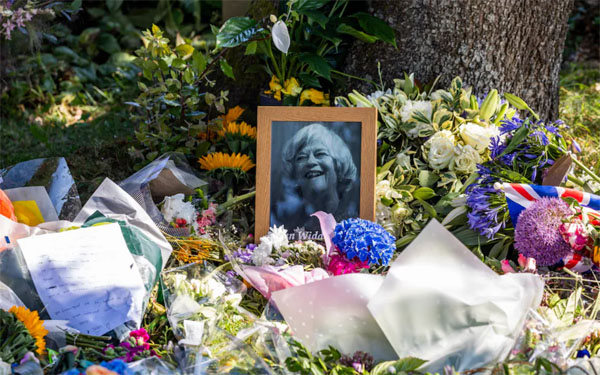
After Southport, with the gruesome murders attributed to a “Welsh choirboy”, policing in England was thought to have dredged such depths of incompetence that a case could be made that public confidence had reached rock bottom.
Then came the Henry Novak murder where, if possible, the police seem to have dredged a new low, further eroding public confidence – difficult though that might be from such a low base.
Now we have the handling of Ann Widdecombe’s murder which, despite the incongruous behaviour of the suspect, had Devon and Cornwall’s Assistant Chief Constable Matt Longman insisting as late as Sunday that there was “still no information to suggest that this is a terrorism-related incident”, adding that there was “nothing to suggest” that the murder “was politically motivated”.
It is that choice of words which is damning. To recap from my post yesterday:
A man gets into his car in Rotherham, apparently with a murder weapon tucked into his pocket. He drives 270 miles directly to a remote village on the flanks of Dartmoor, parks up and walks to the house of a prominent politician, where he murders her. He drives back to Rotherham where, a few days later he is arrested by counter-terrorism police.
This was already known to Longman at the time – the man was already in custody and details of his movements had been published. It had been established that nothing had been stolen – ruling out the highly implausible scenario of a burglary gone wrong.
The circumstances, therefore, were highly suggestive of political motivation. In fact, this stood head and shoulders above any other theory as to the most likely motivation for the murder.
This was essentially confirmed by home secretary Mahmood yesterday morning, when she posted on X announcing that she had spoken to the head of Terrorism Police. Following new information and evidence, he stated, “they are now leading on the investigation into the horrific murder of Ann Widdecombe”.
To frame this in terms of “new information and evidence” is strongly suggestive of a face-saver, couched so as to save the blushes (and professional reputation) of Devon and Cornwall Police.
A more seasoned appraisal come from Jonathan Hall, the UK’s independent reviewer of terrorism legislation, speaking on BBC Radio 4’s PM programme. He expressed surprise at the police’s public statements, expecting them to remain open-minded regarding the motive.
“I’m not going to give advice to the police”, he said, “But I think it’s much better to be simply open-minded and say to the public something that’s, you know, true, we don’t know what’s going on, rather than appearing to rule something out and then having to reverse their position when new facts emerge”.
Even then, we get the “new facts” schtick, when, by Sunday at the latest, if the police were to ruled out political motivation they needed to come out openly with the reasons, pointing to a credible alternative – something they had not done.
Nonetheless, it is hard to discern whether we are dealing with common and garden police incompetence, and whether this stands alone or is tempered with the old-fashioned mix of arrogance, from an authoritarian senior officer who sees nothing wrong with patronising the public and expecting people to fall in with his commands.
In the context, no one sensible would object to expressions of concern about the effects of speculation but – as with the Southport murders – the most effective way of dampening this down is for the authorities to be open and timely in their release of information, and candid in their appraisal of the evidence.
For Longman to leave the bizarre circumstances of the murder hanging – without acknowledging the possibility of political motivation – was treating the public like simpletons, while demanding that they refrained from speculation was akin to micturition into an airflow induced by regional pressure differentials.
By so doing, what Longman has achieved is to build up a head of steam behind the very speculation that he sought to involve, giving Farage and his Reform colleagues justified cause to complain variously that the police were covering up the cause of the murder and were seeking to downplay the risks to other politicians.
Unwittingly, therefore (we must assume it is unwitting), he has created a damburst effect, where Farage’s complaints and accusations have been magnified and now, with the referral of the case to the terrorism police, affording him considerable credibility, silencing his critics.
This, in itself, represents a remarkable turnaround in Farage’s fortunes. On the back foot over his and his party’s finances, with the media baying for blood, he has now assumed the stance of a righteous campaigner, seeking protection for himself and his troops, taking on the mantle to the victim which, only a few days ago, would have seemed inconceivable.
Even Mahmood is now on the defensive, having been forced to make a statement in the Commons, accepting now that this murder, together with the murders of Jo Cox and David Amess, raises questions about the security of those in public life.
Accepting publicly for the first time Farage’s concerns for his own security, she has offered him a meeting with the chair of RAVEC – the Royal and VIP Executive Committee – the independent body within the Home Office that manages the security of those in public life. She says she will also be looking at what security guidance can be provided to former MPs, working with the Speaker, who also has a role in protecting MPs.
Mahmood finished her statement by describing “today” as “a dark day in our political life” – when she must surely have meant last Wednesday when Ann Widdecombe was murdered.
But, of course, there are broader implications, raised by Tory Chris Phelps in response to statement, embracing all the threats against those in public life. Any threats against MPs, who have been democratically elected to represent their constituents, or against others in public life, should be taken extremely seriously, he says.
He too referred to Jo Cox and Sir David Amess – both murdered within the last ten year, to which is now added a former MP. By he also referred to 2017 when terrorist Khalid Masood drove a car into pedestrians along Westminster bridge, injuring more than 50 people, four of them fatally.
He then ran into New Palace Yard – just yards from where MPs sit in this Chamber, here he fatally stabbed PC Keith Palmer. That too was an attack on democracy, he averred.
There can be no dispute as to the seriousness of all this but there is another worrying aspect. With the Houses of Parliament now surrounded be security barriers, protected by gun-toting police, with visitors now forced through time-consuming and intrusive airline-style searches, MPs now stand to become even more detached and remote from their electorates than they already are.
What the public at large is seen as a source of threat from which MPs have to be protected, it is hard to see how representative democracy can survive, not least because the fear and detachment may feed on itself and further sour relations between electors and elected.
For the Right, though, there is at least something good to have come out of all this – although one hardly dares to say it out loud. While the Left have been feeding off the murder of Jo Cox, slaughtered by a “right wing” terrorist (although they are less voluble about Amess, murdered by the son of a Somali immigrant), the books are now balanced by Ann Widdecombe. The Right now have their martyr.
All that is now needed is for the suspect to have Left-leaning tendences or to be shown to embrace a cause favoured by the Left. For that, we will have to wait a while. Although the name of the suspect is known to the media, this has not been publicly released.
In the normal course of events, he would have been in court yesterday and would have been identified but, having been re-arrested on terrorism charges, the police can now hold him for up to 14 days before they charge him – with another 24 hours before he is brought before a magistrate’s court.
Entering into conspiracy theory territory, one wonders whether the willingness to accept a terrorist link was in part motivated by a need to keep the suspect out of the courts – and therefore anonymous – until parliament has risen, when ministers can no longer be questioned in the House.
Either way, it is going to be a while before we know more about the suspect in a story set to dominate the silly season.
